
Date: 4th century (terminus post quem August 16/17 327 CE)
Location: Tartus (Syria) (uncertain if findspot of place of purchase)
Dimensions: 1.91 cm
Current location: Virginia Museum of Fine Arts, Richmond, VA, US
Link to artefact: Virginia Museum of Fine Arts, Richmond, VA, US
This is a phantastic ancient signet ring engraved with a horoscope. Depicted is Asklepios, the Greek god of medicine, with his symbol of a staff entwined by a snake to his left and the Greek word ΥΓΙΑ (from “ὑγιάζω”, verb 1st sg fut ind act) meaning “make sound” to his right.
The ring has 24 facets, each inscribed with Greek letters. The inscription on the hoop gives the personal horoscope of the owner who was born in the 10th hour on the night of 16/17 August in the year 327. The horoscope begins at the right of the bezel and is to be read in three lines with three columns each:
ΗΛΙ CEΛ ΚΡΟ ΖΕΥ ΑΡ ΑΦΡ ΕΡΜ ΩΡ
ΛΕ ΑΙΓ ΚΑΡ ΤΑΥ CΚΟ ΚΑΡ ΛΕΟ ΚΑΡ
(degrees of the planets inscribed)
Translation by Rea (see below), p. 156:
- Sun in Leo in 23′ (= 143° )
- Moon in Capricorn 27′ (= 297° )
- Saturn in Cancer 27′ (= 117° )
- Jupiter in Taurus in 1′ (= 31° )
- Mars in Scorpio 21′ (= 231° )
- Venus in Cancer 8′ (= 98° )
- Mercury in Leo 8′ (= 128° )
- Horoscopus (Ascendant) in Cancer 10′ (= 100° )
Figures in (): positions on the 360° circuit, necessary for consulting modern astronomical tables.
See for modern tables:
- Bryant Tuckerman, Planetary, Lunar, and Solar Positions 601 B.C. to A. D. 1 At Five-Day and Ten-Day Intervals (Philadelphia, 1962). https://archive.org/details/bwb_C0-BRH-219
- Bryant Tuckerman, Planetary, Lunar, and Solar Positions A.D. 2 to A.D. 1649 At Five-Day and Ten-Day Intervals (Philadelphia, 1964). https://archive.org/details/bwb_T5-ARK-874/
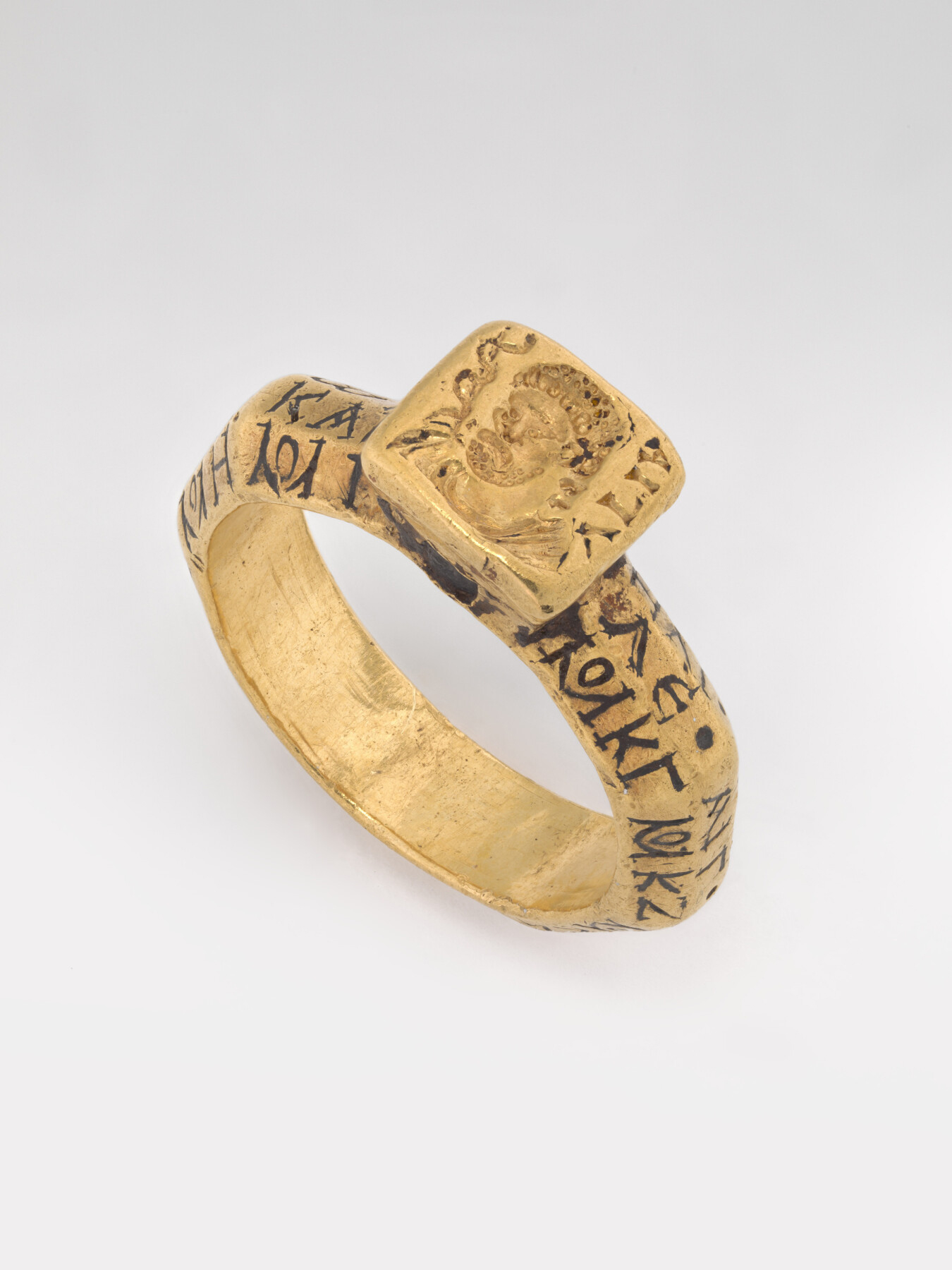
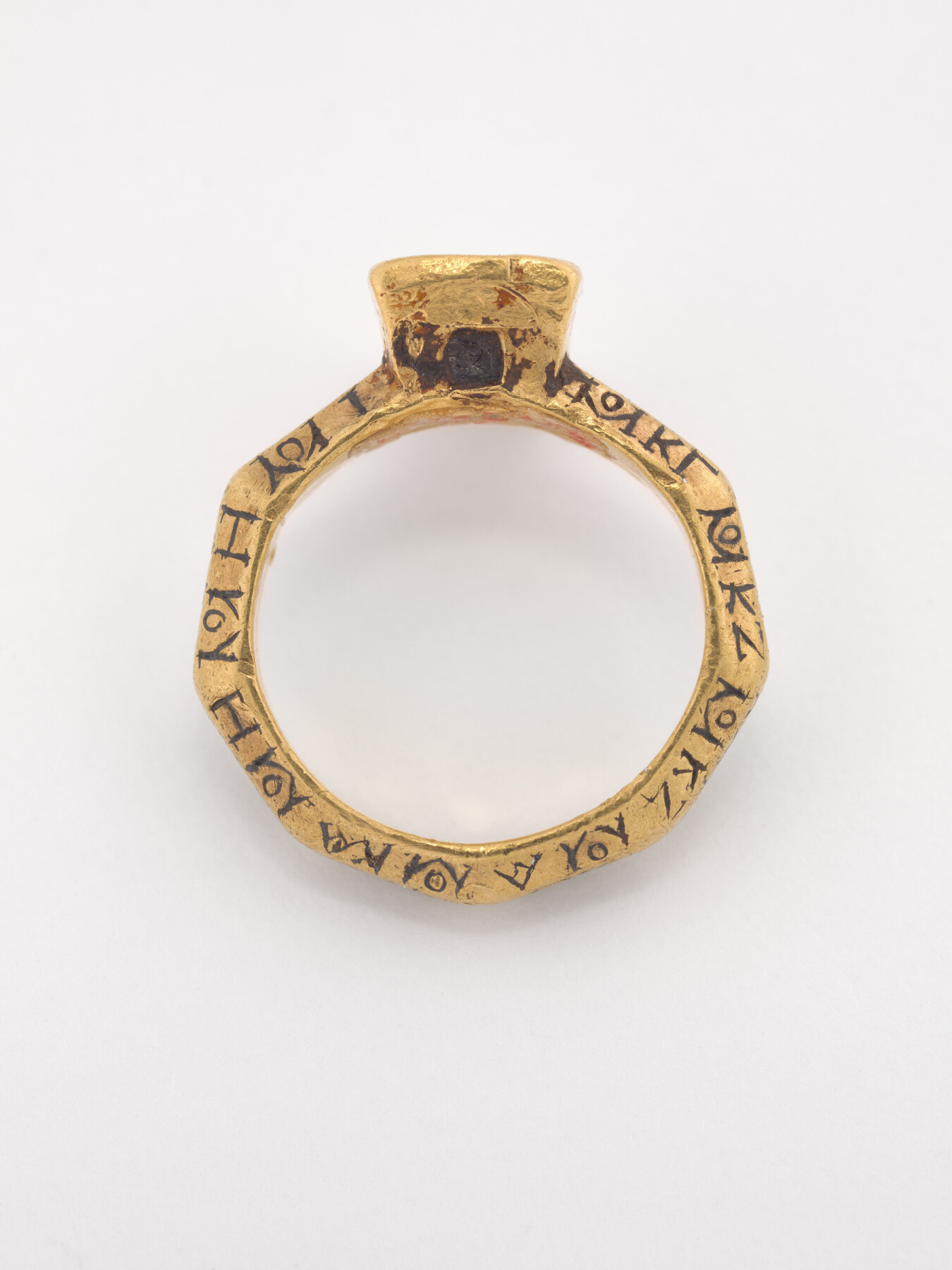
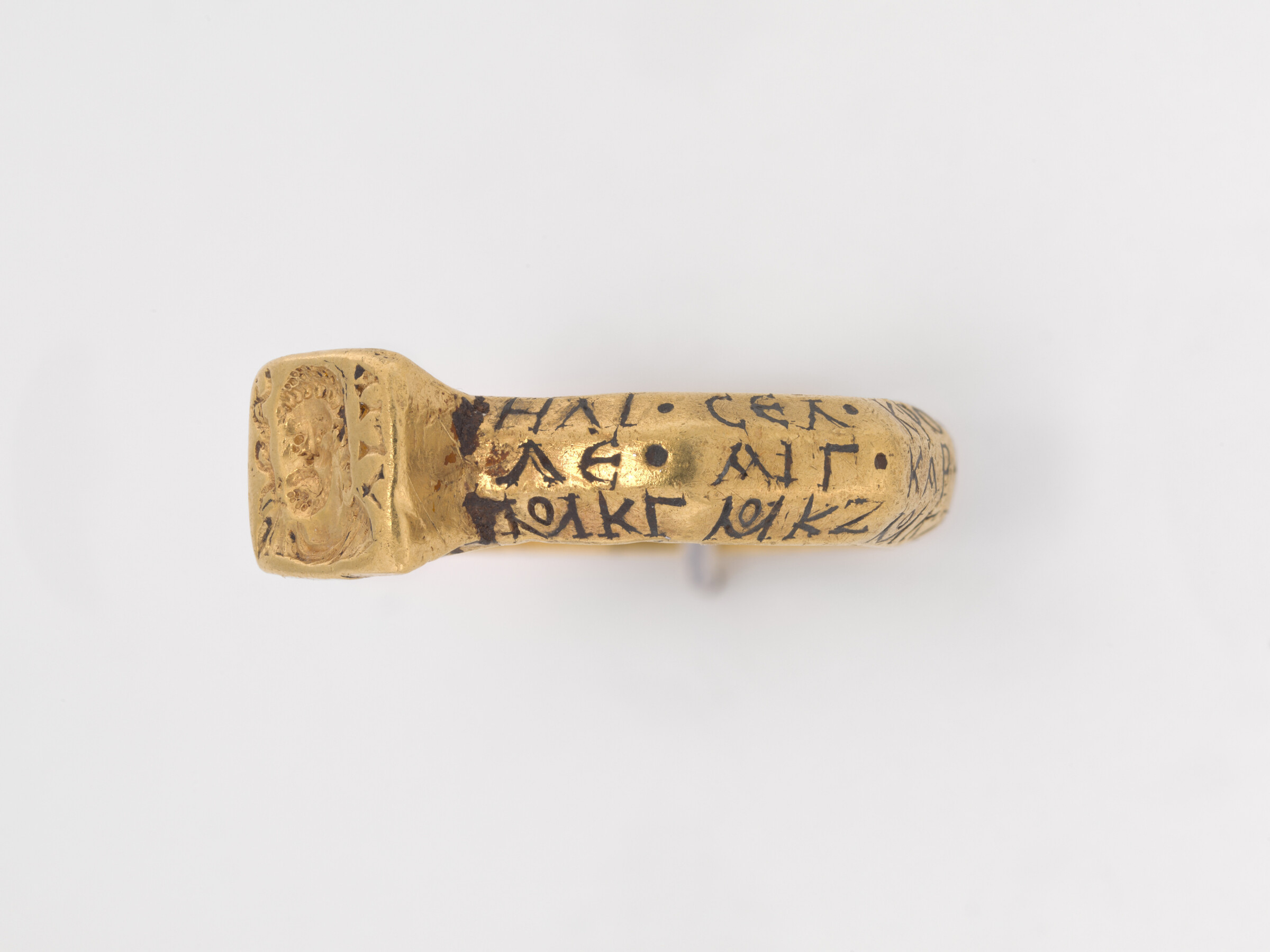
You can find images of all sides and the all of the inscriptions at: Virginia Museum of Fine Arts, Richmond, VA, US
See for a detailed publication and discussion of the ring:
J. R. Rea, A Gold Ring with a Horoscope of A.D. 327, in: Zeitschrift für Papyrologie und Epigraphik, Bd. 39 (1980), pp. 155-158. Link to the paper in JSTOR (free account needed for access): https://www.jstor.org/stable/20185899