
This is the prayer to Isis in the fascinating, fully encrypted ritual manual PGM LVII (PGM 57).
Due to the fragmentary condition of the papyrus, the goal of the ritual is not entirely clear. At one point the instruction says: “Accomplish for him, NN, however many things I wrote for you on [this]!” At the end of the preserved text, however, it says: “Make, oh most glorious Providence (note: Isis) the one, who yesterday was undesired, elegant [in the eyes of all(?)], and make […..]”
I made a complete transcription of the encoded Greek text and checked the spellings of the secret divine names. The encoded text was never published in transcription so I hope you enjoy seeing this ancient testimony of worship of Isis (by knowing what you see 🙂
While the prayer itself is short, it holds a uniquely preserved attestation of the tremendous powers of Isis: She is said to be able to move the constellation of the Great Bear. In ancient Egyptian belief, the constellation was called “Mesechtiu” and assigned to the desert god Seth. In the Late Period the constellation was assigned to Osiris. In the Nut-Book of the Graeco-Egyptian period, the constellation is referred to as “Chepesch (thigh)” and probably refers to the sky goddess Nut. These different testimonies do not mean that they reflect a general / common belief of their individual times, and deities in the magical papyri often show individual characteristics and powers, sometimes reflecting ancient Egyptian beliefs, sometimes illustrating new ideas. So we can’t exactly determine how this pairing of Isis and the Great Bear was understood by the practitioner of PGM LVII.
Translation (I did not copy the code of the instructions ahead of the prayer, here given in round brackets):
The compulsion-formula in order to show you whether the procedure will be successful: As you burn savin juniper together with the papyrus strip, say:
“[Isis,] pure maiden, [give] me a sign of the outcomes! Uncover your holy veil! Shake (out) the black fold of your garment and set in motion the constellation of the (Great) Bear!
Holy [Iôth]ê Pnoun Gmoêr Mendoumba, You with a great name: I[ak]ô Phthoêri Thermoêr Phthaô, You with a great name: Iothê [Phnou]thouêr Bôbelix, You with a great name: Iakô.
[Ἶϲι] ἁγν̣ὴ κούρα ϲημε̣ῖόν μοι τῶν ἀποτελεϲμάτων
[δόϲ. ἀ]ν̣α̣κ̣άλυψον τ[ὸ]ν̣ ïερὸν πέπλον̣. τίναξόν ϲου τὴν μέλαι-
[ναν πτ]υ̣χὴν καὶ κείν̣ηϲον τὸ ϲύμπλ̣εγμα τῆϲ Ἄρκτου, ἅγιε
[ιωθ]η πνουν γμοηρ μενδουμβα ὁ μεγαλώνυμοϲ ïα̣-
[κω] φθοηρι θερμοηρ φθαω ὁ μεγαλώνυμοϲ ιωθη̣
[φνου]θουηρ βωβε̣λ̣ιξ ὁ μεγαλώνυμοϲ ïακ̣ω.
The wonderful Greek transcription is mostly taken from A. Maravela in: Faraone and Torallas-Tovar, Greek and Egyptian Magical Formularies, vol. 1, pp. 38, 40.
I structured the translation here in the way it was uttered while the Greek text follows exactly the line breaks of the original text (for those of you who enjoy checking the encoded signs 🙂
The papyrus has so far been dated to the Hadrianic period / first half of the second century – based on a papyrus strip inscribed with two declarations which was used for repairs. These declarations can be dated to either 117 A.D. or 131 A.D. Looking at this logically, it is unlikely that the magical text was created at the same time as the declarations. It is much more likely that it was created either much earlier or much later then them.
Side note: As an Asterix & Obelix fan, I particularly enjoyed reading the secret divine name “Bôbelix” 🙂
Here are the photos and my transcription:
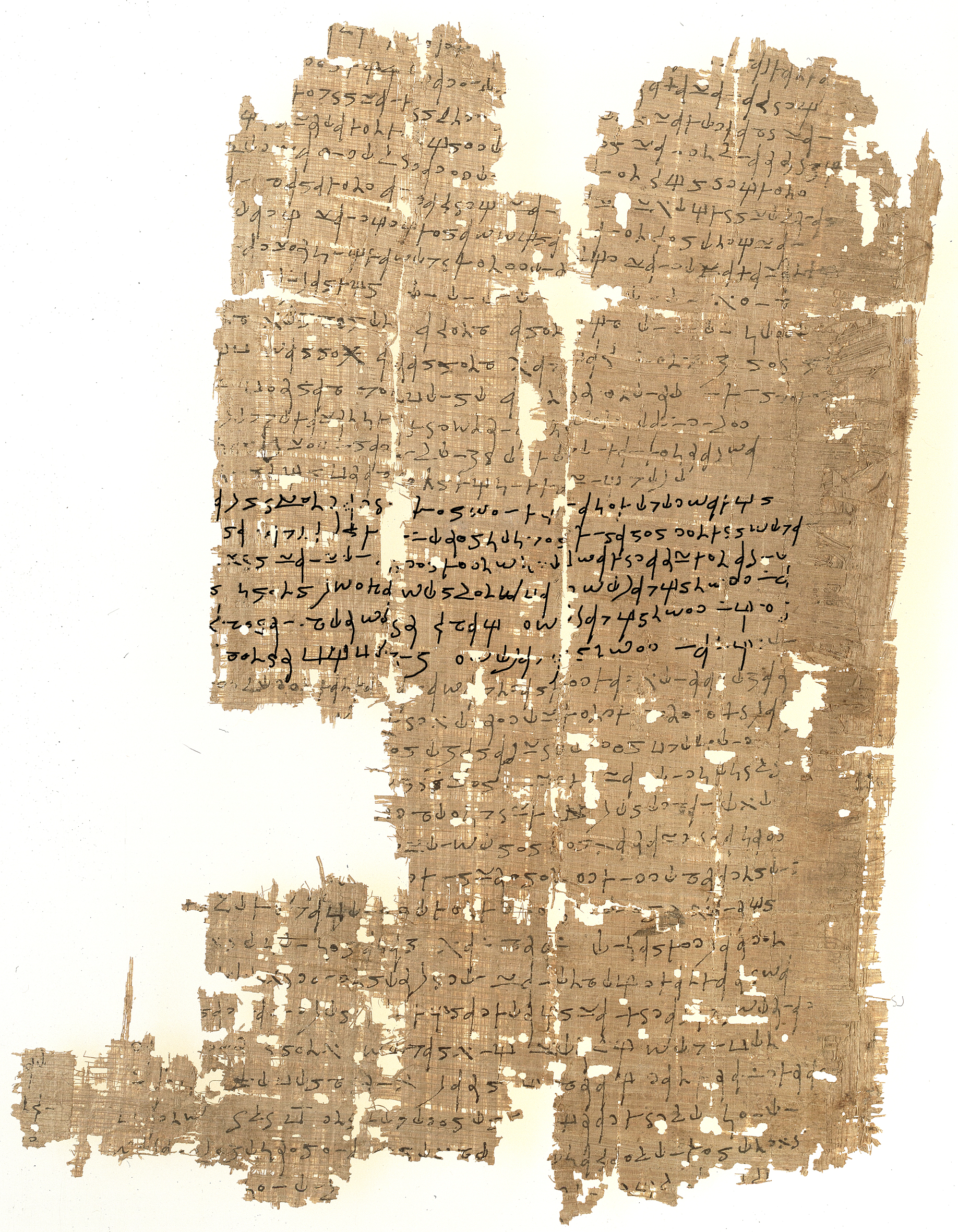
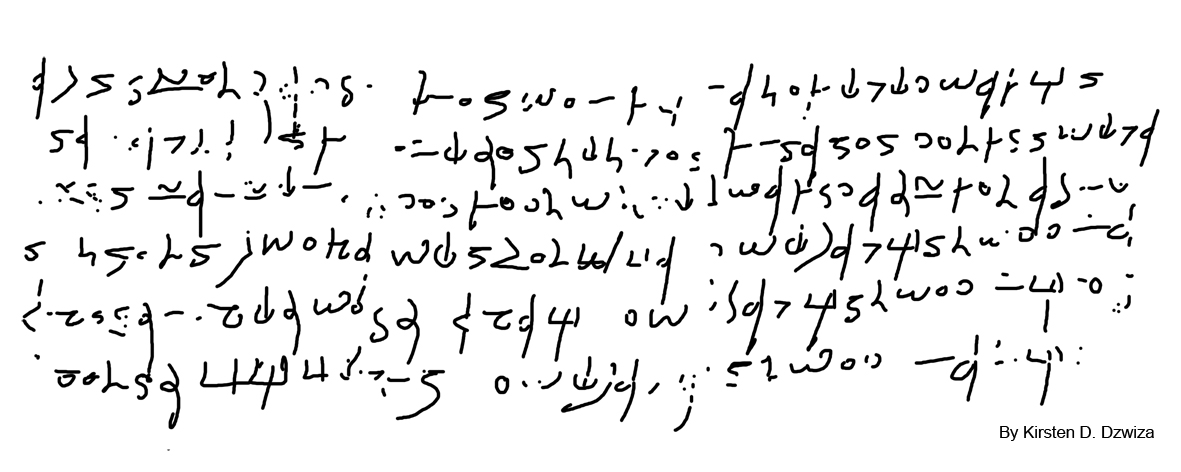
Here is the link to the papyrus: P.Mich.inv. 534, recto, University of Michigan Library, Papyrus Collection (USA)